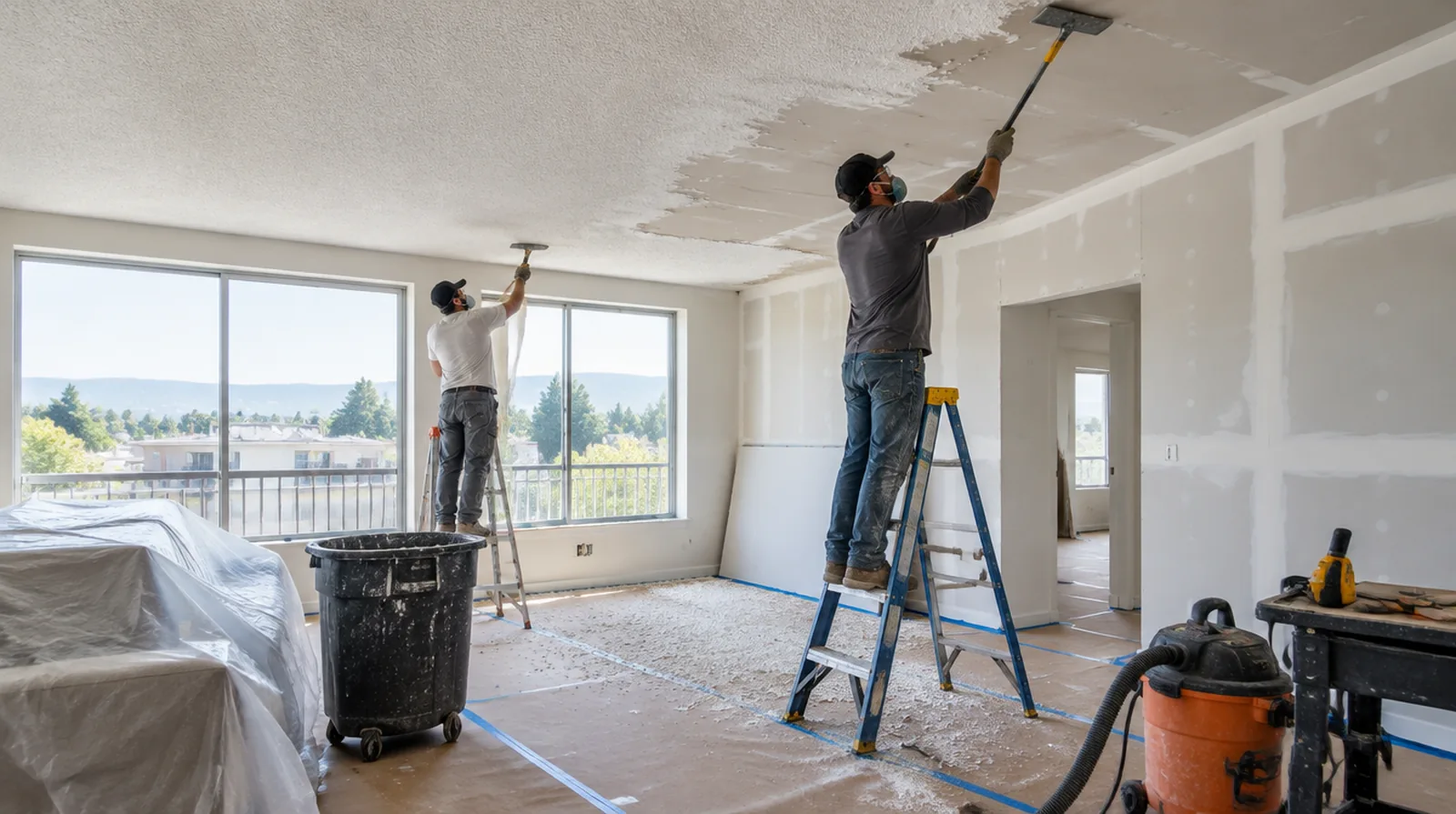
Protect the entire room
Overhead coating removal can distribute debris throughout the room unless protection is comprehensive. Arrange masking, furniture relocation and a suitable removal route instead of covering only a small patch below. If occupancy must resume on a certain day, include the later primer and paint stages in the timetable as well as drywall installation and finishing.
Review ceiling condition
The texture may conceal uneven joints, old patches or an unfinished board surface. Allow for assessment and further finishing after safe removal exposes the original face. If the current finish is unusual, keep a small reference sample or a close photograph to support the discussion about blending and restoration.
Separate specialist work
Removal of a confirmed hazardous coating requires the relevant specialist process, not ordinary ceiling scraping. Have an suitable professional address containment, disposal and handling before subsequent drywall finishing is arranged. If a household member is sensitive to dust, discuss containment and cleaning expectations before choosing how to stage the space work.
Establish material safety
Do not disturb an older ceiling texture until any material safety concerns have been evaluated. Arrange qualified testing where warranted and follow applicable requirements before disturbing the material. Where a finished perimeter is prominent, decide whether trim stays in position or is removed before agreeing how the new surface meets that edge.
Check for painted coatings
Paint over a textured coating could change how readily the material releases. A small controlled assessment helps explain labor and potential damage to the underlying surface. Where a neat final edge matters, agree whether the finish ends against existing trim or whether that trim will be removed and replaced.
Plan cleanup and reopening
Allow for debris removal, drying and decorating instead of assuming the interior is complete immediately after scraping. Review the agreed surface condition and cleanup before returning the space to normal use. If the room will remain occupied, identify a practical separation between the project space and the space that still needs daily access.
Confirm primer and paint
Plan compatible primer and paint for the exposed ceiling once repairs and finishing are dry. Clarify whether the drywall quote stops at a ready for painting finish or includes decorative coatings. If materials must cross common building areas, plan the protection and access route so other occupants are not needlessly obstructed by deliveries.
Plan fixture coordination
Light fittings, alarms and other ceiling devices might need separate handling by the suitable trade. The scope should identify who disconnects and reinstalls them rather than leaving that responsibility unclear. For an older repair with no clear history, describe when the mark first appeared and whether it has changed through more than one season.
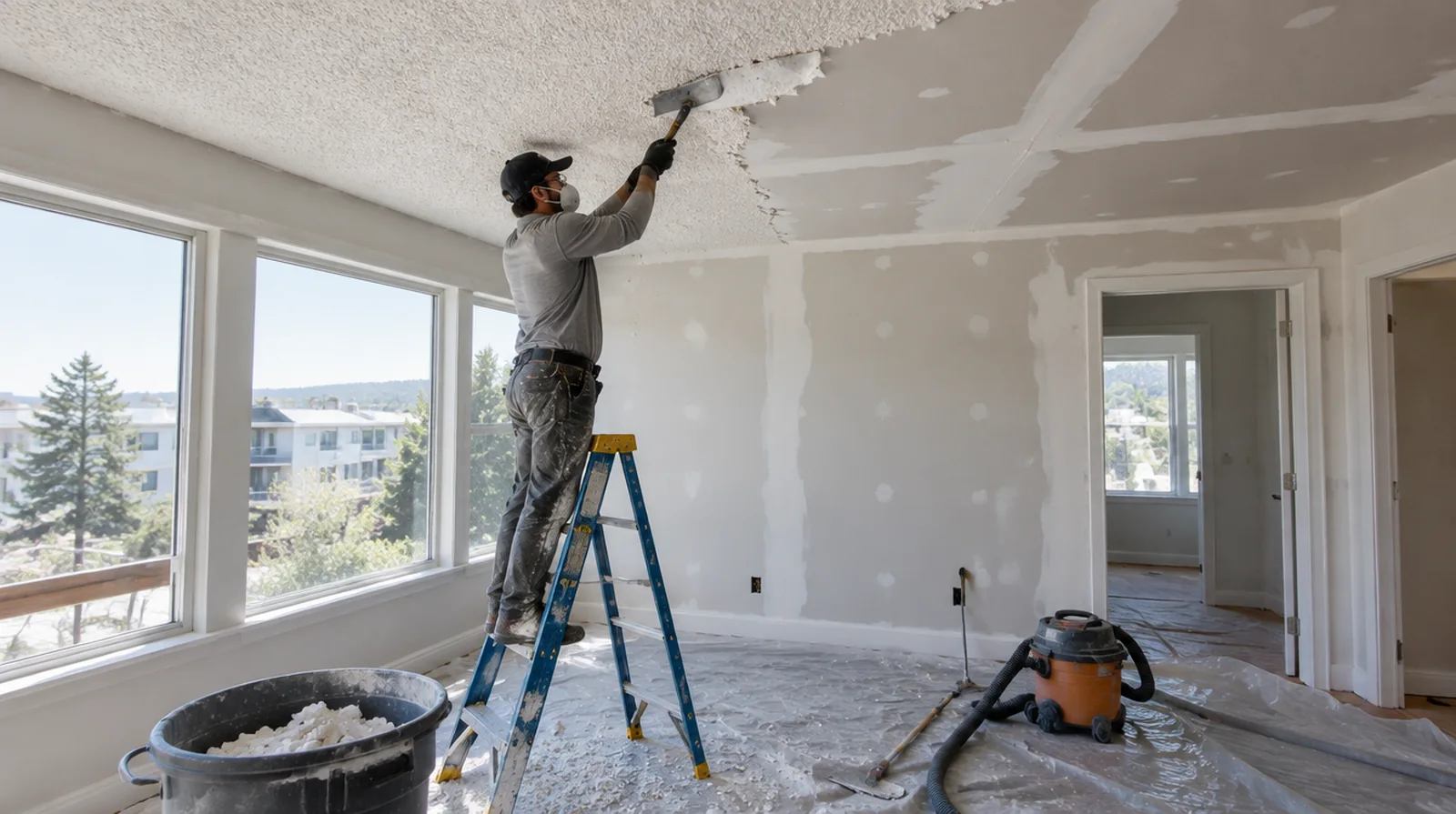
Avoid unnecessary saturation
Avoid a process that introduces so much water that it damages the supporting gypsum. Choose the method with regard to both the coating response and the condition of the board beneath it. If materials must cross common building areas, plan the protection and access route so other occupants are not needlessly obstructed by deliveries.
Account for side lighting
Windows and ceiling fixtures can expose shallow ridges once the heavy texture is gone. A wider skim or more extensive finishing may be appropriate for an original surface not built to remain smooth. When damage followed other building work, describe the nearby alterations and the sequence between those changes and the first visible defect.
Project context in San Mateo
Many units have smooth walls, which show flaws more than textured ones. A dining room wall shared with a neighbor may also be a fire-rated assembly, so the right board type must be used.
Scope questions before finishing
If there is a fixed move in date, reserve adequate time for the coating stages after drywall work rather than counting only the installation period.
If an independent painter completes decoration, agree the condition of the handed over surface and assign responsibility for small final corrections.
If scheduling is the main concern, separate hands on labor from drying intervals instead of treating every visit as a full day of active work.
When more damage could be hidden, ask how any added scope will be documented before extra material is removed or replaced.
For a planned new wall mounted fixture, resolve its backing requirements while the cavity remains open instead of cutting into completed drywall later.
For a distinctive existing pattern, retain a reference sample or detailed picture to make the matching discussion more specific.
For a small repair with extensive setup, compare the total scope rather than assuming the price should follow the hole dimensions alone.
For a project with several trades, agree which inspection or handover point must happen before the next person starts work.
If the wall work belongs to a broader renovation, coordinate its order with flooring, cabinetry and trim rather than scheduling finishing in isolation.
If materials must cross common building areas, plan the protection and access route so other occupants are not needlessly obstructed by deliveries.
If the project is part of a larger remodel, settle the sequence with flooring, trim and cabinet work before setting a final finishing date.
When the wall has strong reflected light, look at the full plane instead of judging only the narrow strip immediately beside the patch.
Explore the San Mateo drywall overview for related options, or read the project planning information before arranging the next stage.
More planning details for San Mateo
San Mateo condos and townhouses often share walls with neighbors, so noise and dust rules matter as much as the repair itself. Check HOA hours, elevator bookings and where a work vehicle can park in the garage. Mild coastal weather is good for drying, but foggy mornings can keep rooms cool.