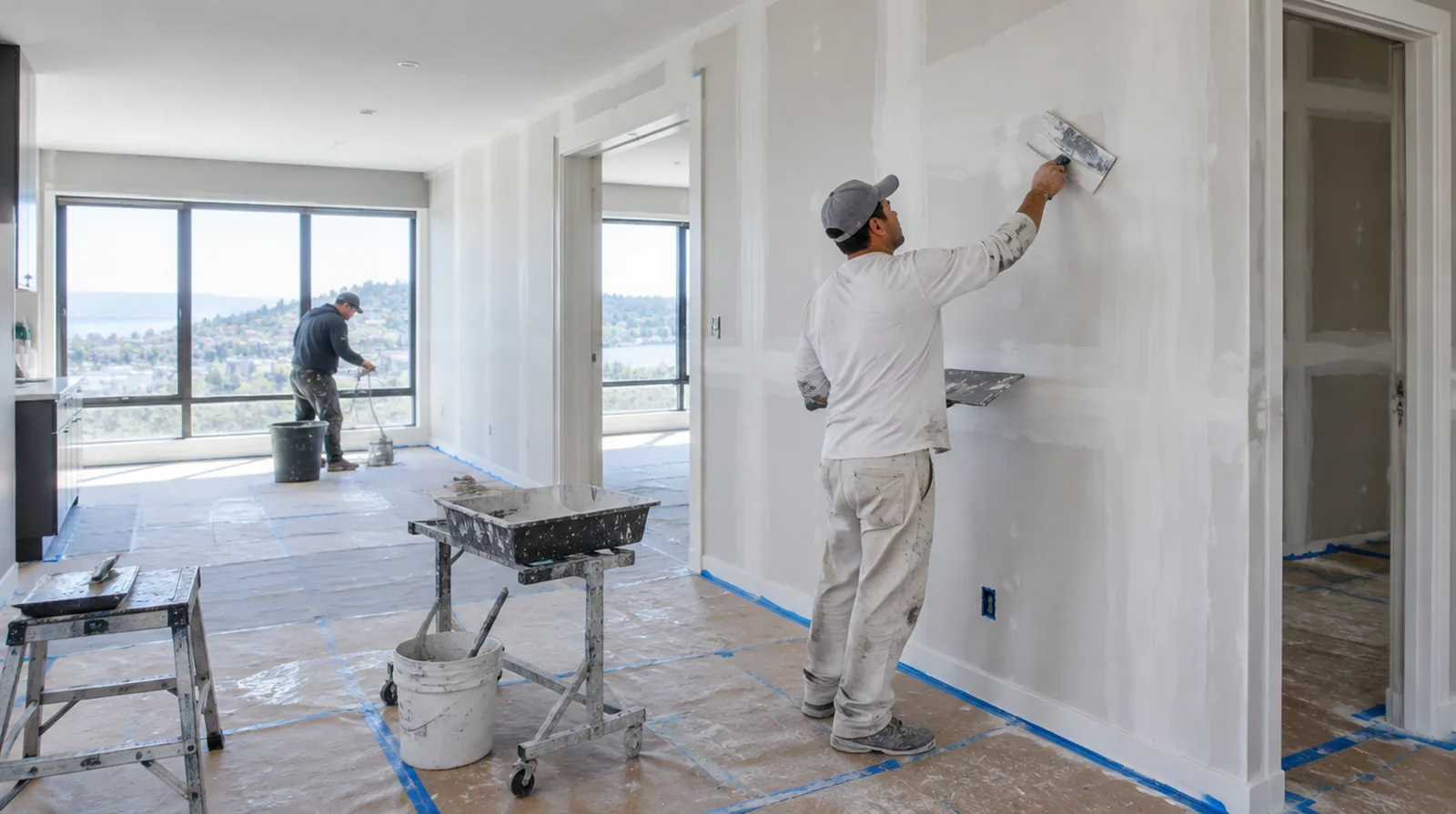
Clean and prepare the wall
Adhesion can be compromised by dirt, oil or residues left on the old coating. Preparation may include cleaning and a suitable bonding treatment based on the condition of the current surface. For a planned new wall mounted fixture, resolve its backing requirements while the cavity remains open instead of cutting into completed drywall later.
Choose paint with the finish
Higher sheen coatings can emphasize small variations that a matte finish makes less obvious. Connect the paint selection to the agreed preparation standard before deciding how extensive the skim work ought to be. When a wall has repeated defects, keep a record of earlier repair attempts so a new assessment does not simply repeat an unsuccessful approach.
Work around trim carefully
Baseboards, frames and fixed fittings create edges that need neat transitions and protection. Review whether removing trim is worthwhile or whether the finish will stop cleanly against it. If the wall work belongs to a broader renovation, coordinate its order with flooring, cabinetry and trim rather than scheduling finishing in isolation.
Assess the existing coating
A thin new finish depends on the strength of the coating that will remain underneath it. The assessment should distinguish a sound but uneven surface from one that is actively peeling. If a room has only limited ventilation, discuss how the finishing materials can dry without disrupting comfort or spreading dust elsewhere.
Define the smoothing target
Removing the visual effect of light texture is not the same task as straightening a badly uneven plane. The scope should describe what the skim is expected to improve and what remains outside that finish treatment. Where several contractors share the renovation, identify the inspection and handover milestones that determine when each following stage can proceed.
Prime before decoration
Fresh skim compound needs an appropriate primer before the finish paint is applied. Priming equalizes absorption and could help identify small corrections before the last paint coat is applied. For a planned new wall mounted fixture, resolve its backing requirements while the cavity remains open instead of cutting into completed drywall later.
Apply controlled thin layers
A skim coat is intended to refine the surface rather than build a heavy unsupported layer. Deeper texture may require successive passes to level low spots without overloading the high points. If the space will remain occupied, identify a practical separation between the work area and the space that still needs daily access.
Refine with minimal sanding
Careful application limits how much abrasive refinement is needed later. Even so, plan dust protection and extraction for the fine particles produced by broad surface work. Where occupants have dust sensitivity concerns, agree containment and cleaning measures before settling the way the space will be staged.
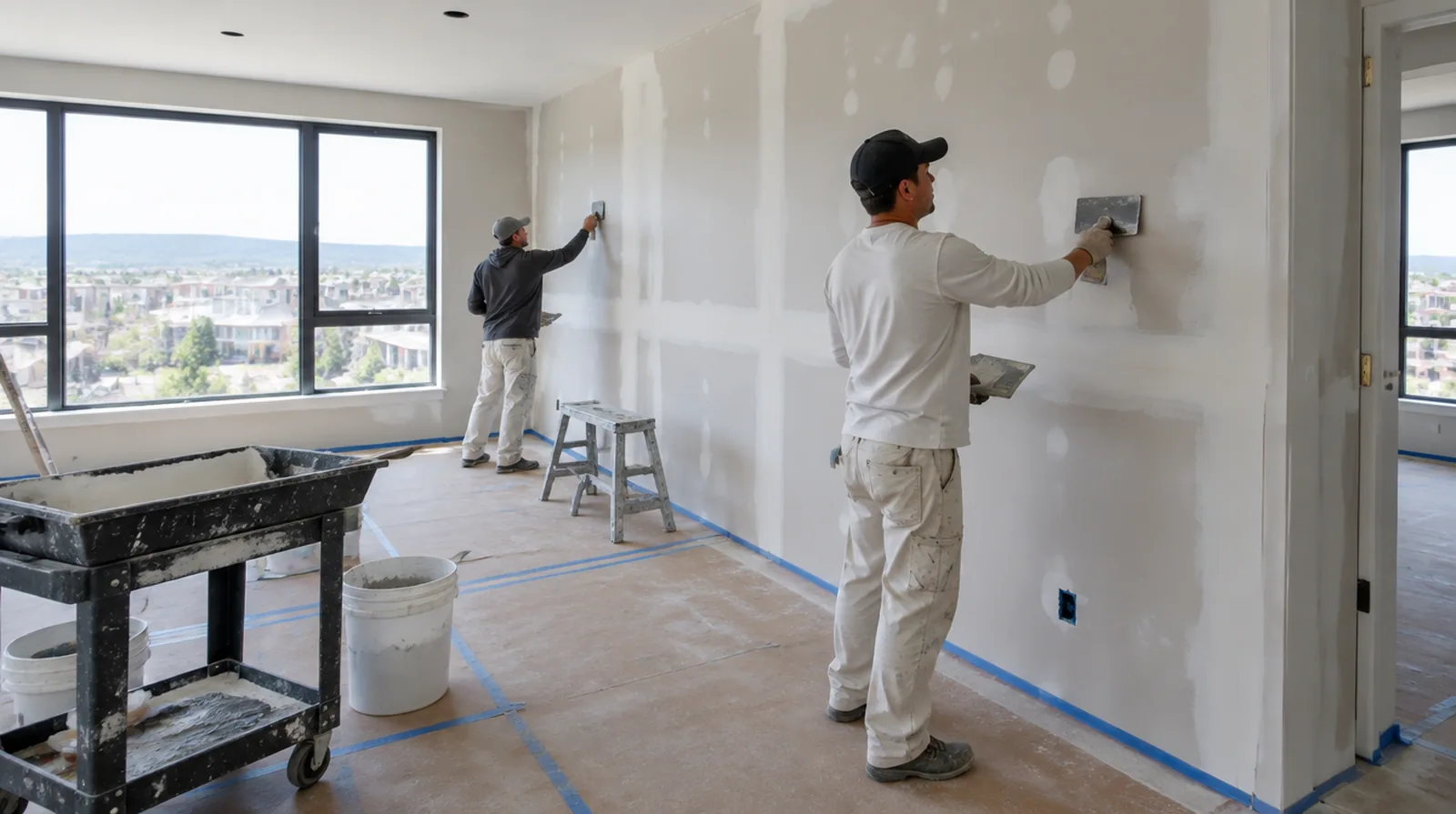
Inspect using side light
A surface can appear even under direct lighting while revealing shallow tool lines from the side. Review the dry wall under the conditions that will matter after the space is decorated. For a tightly furnished room, plan temporary storage and the minimum working clearance before material is carried into the property.
Stabilize torn paper
Exposed drywall paper can bubble when it receives wet compound without suitable preparation. Stabilize those paper defects with an suitable treatment before beginning the broad skim application. If the problem developed after another renovation, explain which nearby materials or building systems changed before the damage became noticeable.
Project context in San Mateo
San Mateo condos and townhouses often share walls with neighbors, so noise and dust rules matter as much as the repair itself. Many units have smooth walls, which show flaws more than textured ones.
Scope questions before finishing
If a room has only limited ventilation, discuss how the finishing materials can dry without disrupting comfort or spreading dust elsewhere.
When the protected room includes a doorway, check the clearance for panel movement as well as the amount of space available for finishing tools.
For work spread across distinct planes, record their dimensions separately and describe the boundary of the treatment on each surface.
For a room with restricted airflow, plan drying conditions alongside dust protection and the comfort of people occupying neighboring spaces.
For an older repair with no clear history, describe when the mark first appeared and whether it has changed through more than one season.
If the interior will remain occupied, identify a practical separation between the work area and the space that still needs daily access.
At the handover inspection, review the finish from ordinary room positions using the lighting conditions that were agreed for the work.
When more damage could be hidden, ask how any added scope will be documented before extra material is removed or replaced.
For a limited patch requiring substantial setup, assess the complete package of access and protection instead of relating cost only to the opening size.
While a removed panel exposes the wall cavity, complete the necessary review of concealed work before replacement board closes the opening.
If occupancy must resume on a certain day, include the later primer and paint stages in the timetable as well as drywall installation and finishing.
For a project involving a building manager, confirm access hours and protection requirements before promising a start date or a short completion window.
Explore the San Mateo drywall overview for related options, or read the project planning information before arranging the next stage.
More planning details for San Mateo
Check HOA hours, elevator bookings and where a work vehicle can park in the garage. Mild coastal weather is good for drying, but foggy mornings can keep rooms cool. A dining room wall shared with a neighbor may also be a fire-rated assembly, so the right board type must be used.